
 AR
AR
Understanding Spreads
By Daman Markets Academy
Share the knowledge



In trading, spreads are more than just numbers, they directly impact your profits.
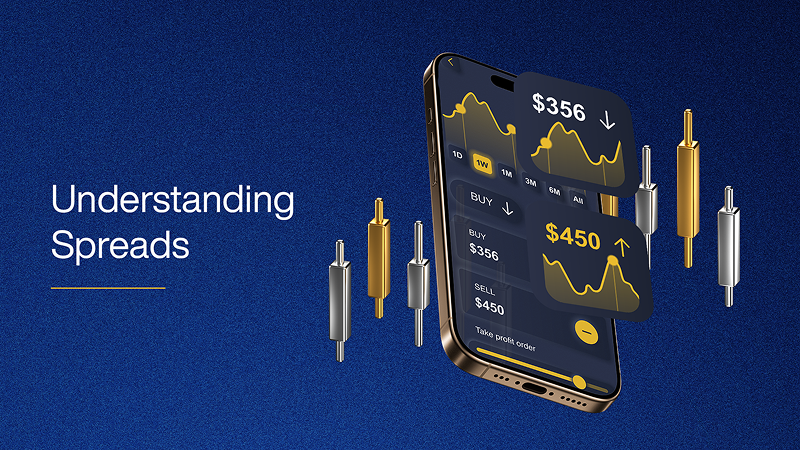
Think of a spread as the difference between the price you can buy (ask) and sell (bid) an asset. This gap is where brokers make money, and where traders need to be strategic to minimize costs.
Why Spreads Matter to You
For traders, spreads represent the cost of entering and exiting trades.
Every time you place a trade, you're starting in the negative by the size of the spread. This means that even if the market moves in your favor, you must cover the spread before making a profit.

The tighter the spread, the quicker you can get into the green and lock in potential gains.
Factors That Influence Spreads
Spreads aren’t fixed, they fluctuate depending on several factors:
- Liquidity: The easier an asset is to trade, the smaller the spread.
- Volume: High trading volume narrows spreads because there are plenty of buyers and sellers.
- Volatility: In fast-moving markets, spreads widen due to risk and price swings.
- Market Hours: Spreads tend to be tighter during active trading hours.
- Economic Events: Important data releases can cause spreads to widen due to market uncertainty.
Spread Cost Calculation
Let’s take the following example:
You buy 10,000 units of the EUR/USD pair at an ask price of 1.10372 and the bid price is 1.10369.
Spread calculation:
- Bid = 1.10369
- Ask = 1.10372
Spread = Ask – Bid = 1.10372 – 1.10369 = 0.00003 (or 0.3 pips)
Cost of spread: To calculate the total spread cost:
- Buy cost = 10,000 units × 1.10372 = 11,037.20
- Sell value = 10,000 units × 1.10369 = 11,036.90
- Spread cost = 11,037.20 – 11,036.90 = $0.30
This means you start the trade at a loss of $0.30 due to the spread. If the market moves in your favor, you’ll need the price to rise above this cost before turning a profit.
Example of How Spreads Affect Trades
Taking the same example above, a bid-ask spread of 0.3 pips may seem small, but it results in an immediate loss of $0.30 due to the spread.
You need the market to move in your favor just to break even. Over time, large spreads can eat away at your profits, while tight spreads allow you to save more on each trade, potentially boosting your overall performance.
Conclusion
Understanding and managing spreads is key to becoming a more efficient trader.
By choosing a broker with tighter spreads and trading during optimal market hours, you can reduce your trading costs and improve your profitability.
Keep an eye on liquidity and volatility when placing trades, as these factors can heavily influence the spread you’ll pay.
The spread may seem like a small detail, but for active traders, it’s the difference between winning and losing. The better you manage spreads, the more you can potentially keep from each trade, giving you the edge in a competitive market.
Share the knowledge
By Daman Markets Academy
This is not investment advice. Past performance is not an indication of future results. Your capital is at risk, please trade responsibly.